Native American Boarding Schools
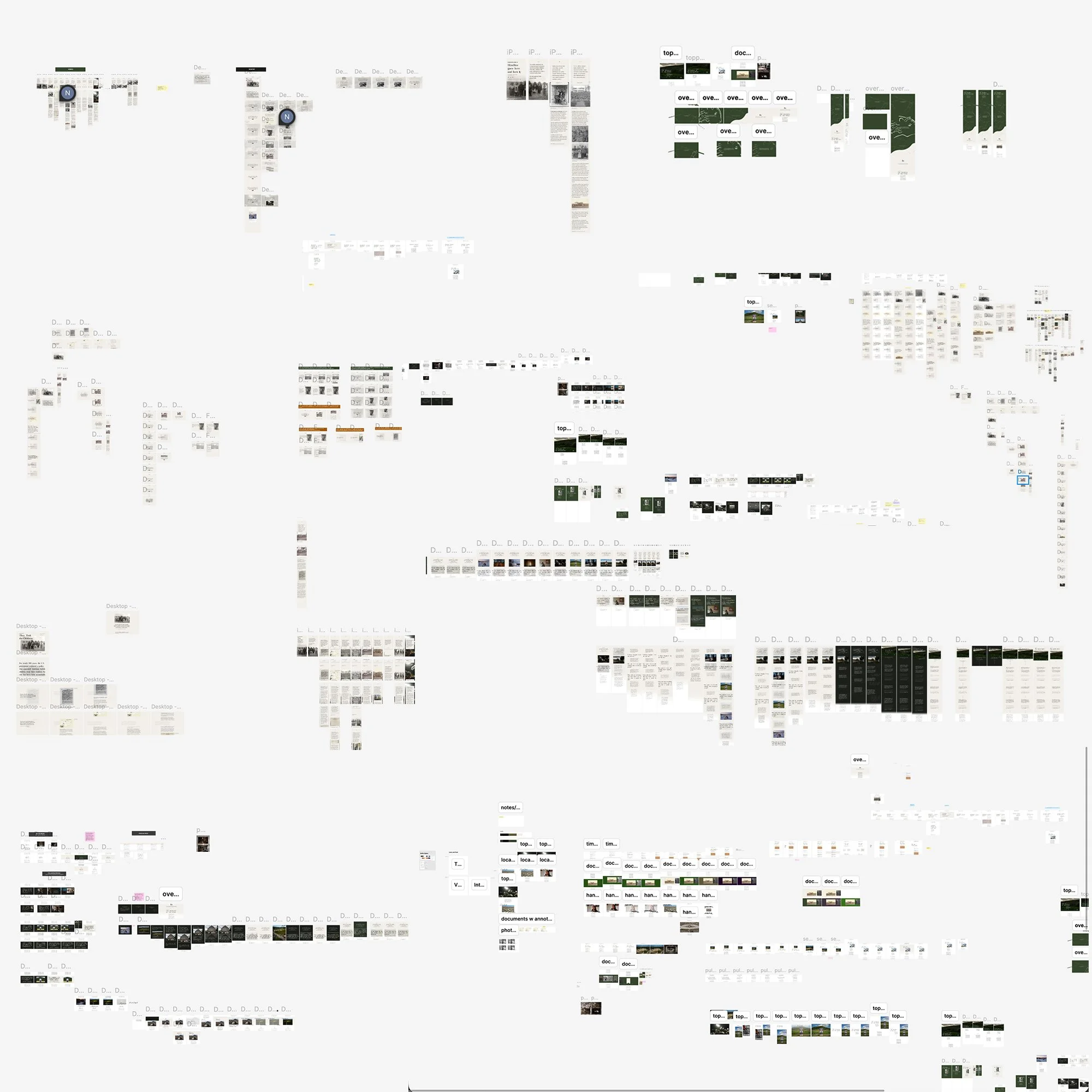
For the last few months of 2023 and all of 2024, I worked on our Native American Boarding Schools project. The project went through many iterations, as you can see by the wireframes. In the end, there were three stories, two special print sections.
They Took the Children (Overview)
As the reporting was underway, we realized not every American reader would have the same understanding of the history. We didn’t want to be repetitive in the stories themselves, or have people read through things they already knew. So we decided to write a separate file, that would allow the reader to get an overview of key historical moments relevant to the series, and choose to learn more about each one if they wished. You can read the story here.
Digital
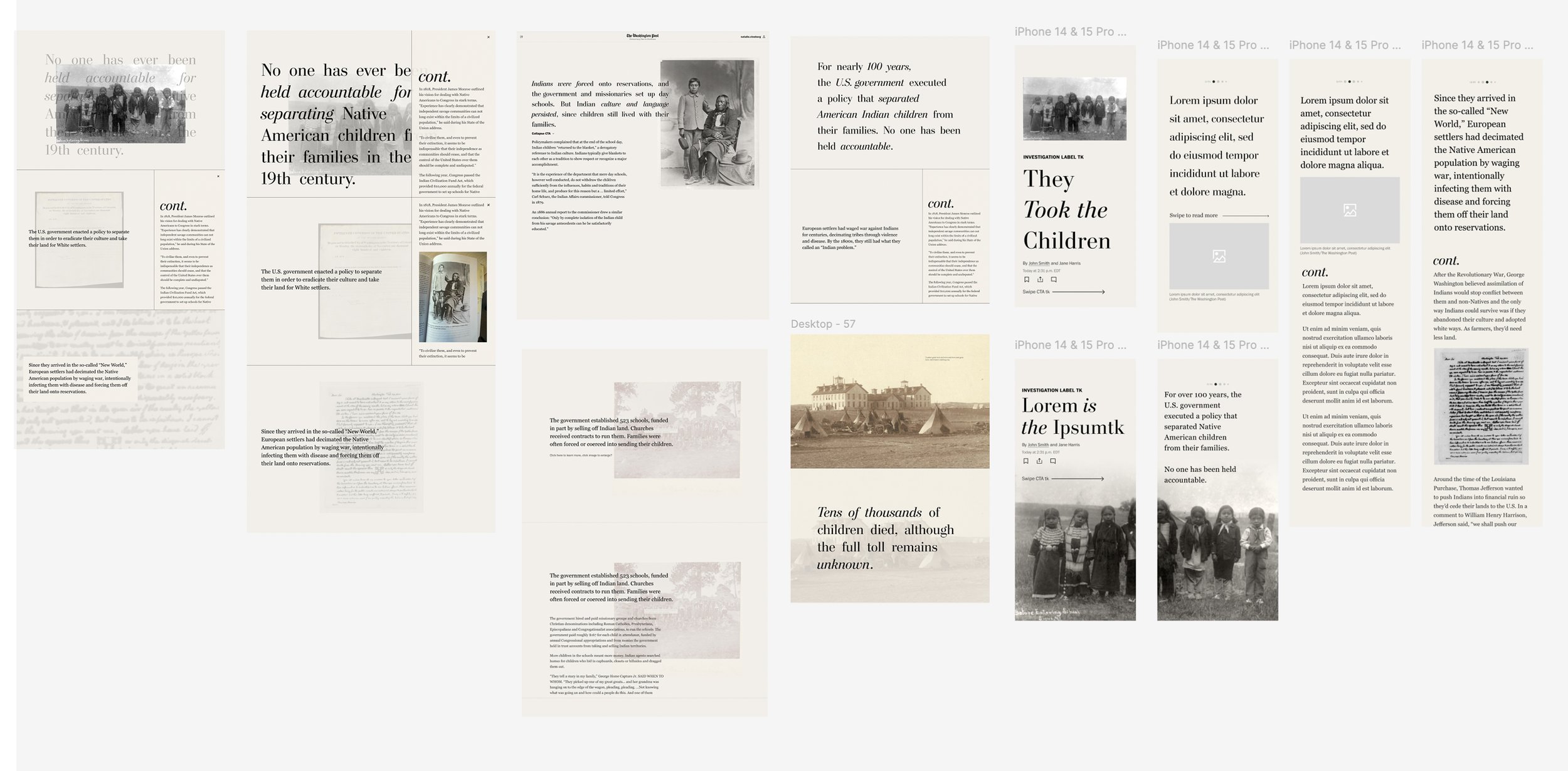
We wanted this story to feel interactive, and almost like a social media carousel, where readers would swipe through to get to the next slide. This required a brand new story format that we had never used before (thank you to Jake Crump for the web development on this project). We tried a lot of ways to do this, including a collapsible overlay on desktop, full screen vs. inset visuals, a more seamless mobile design vs. a more card-like design.
We did user testing, making sure that the story felt intuitive enough to use, and interesting enough to keep reading. Because this story was not a reported, investigative story, it was an optional history, we had more room to experiment and take risks that we might lose some readers along the way. Which, we did! But we learned a lot, and the UX was the foundation for future stories, and then, later, a template we now regularly use.
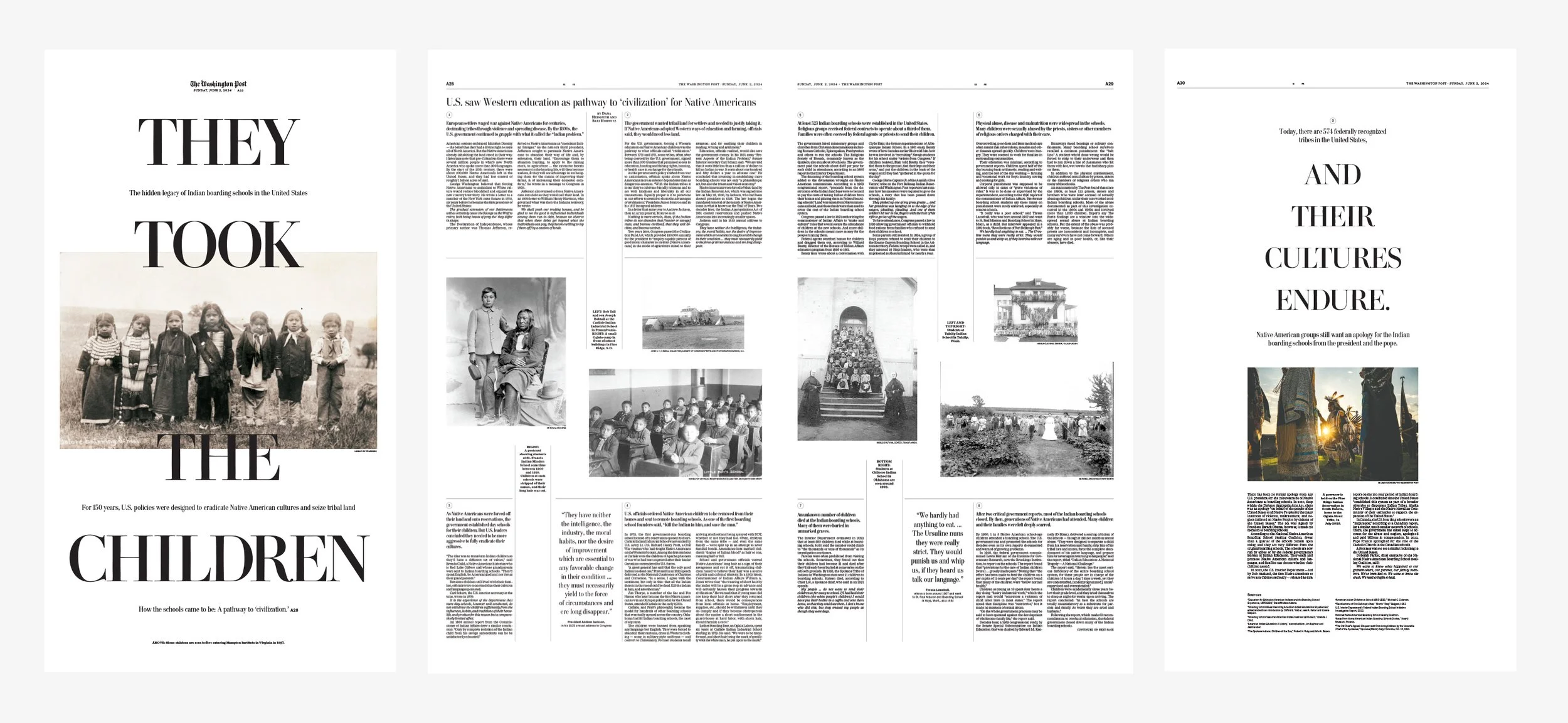
To translate the story for print, we used the headline from this story as the cover of the special section, because it had the most impact. We then spread the 9 moments across the double truck and the last page, with a more curated selection of visuals as well as a few quotes. The goal here was to keep historical feeling of the story and make it digestible and scannable for print.
More than 3,100 students died at schools built to crush Native American cultures
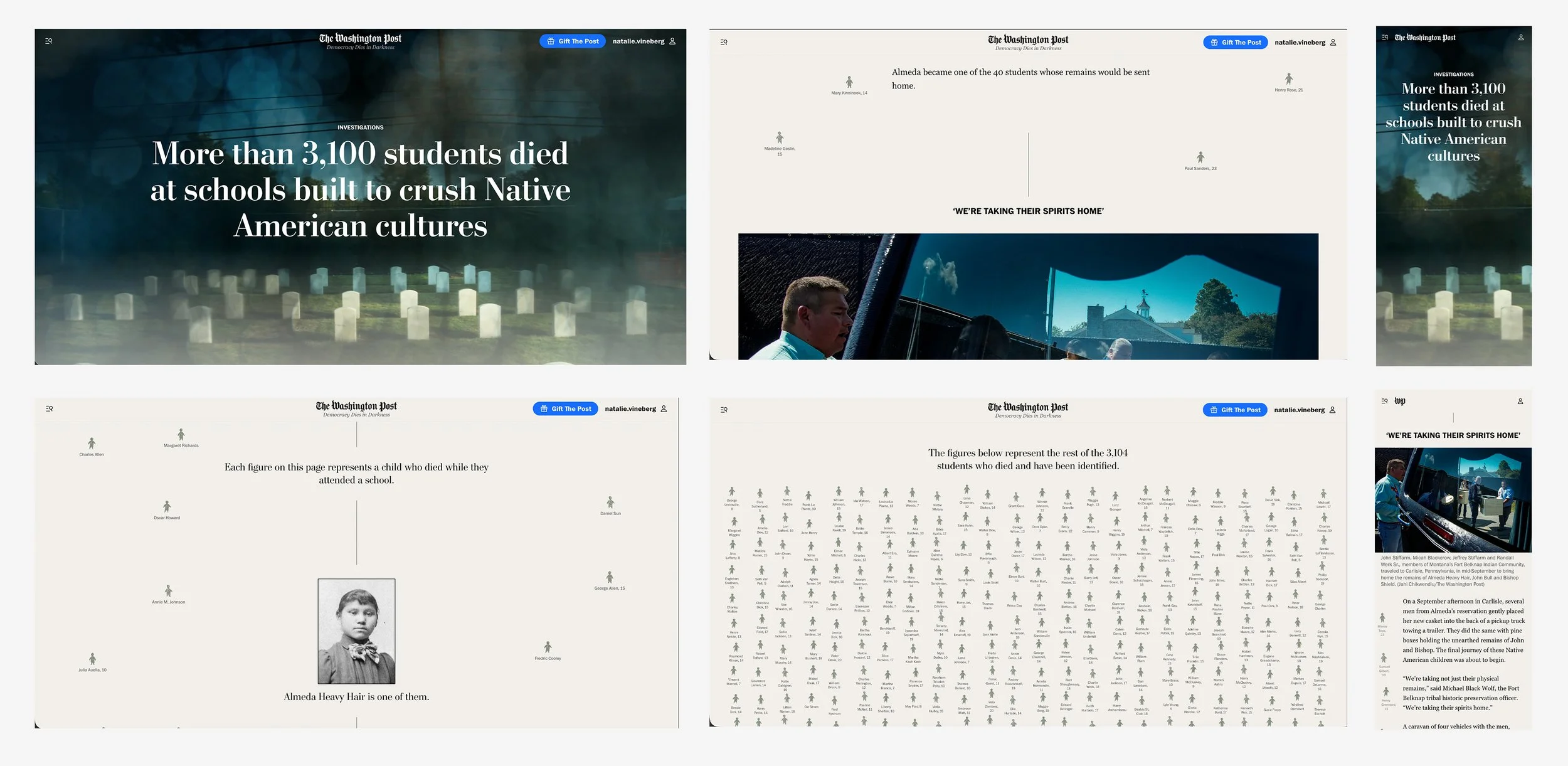
There were a lot of elements to balance in this story. We had this huge number of graves that our reporters found, but we didn’t want that number to feel abstract or impersonal. As a solution, I used little drawings of children that followed you down the page, and we included their names and ages when we had them. Part of the impact came from, even though the story was quite long, when the reader got to the end, they would see how many more children there were, including the children we couldn’t find identifying information for. You can read the story here.
Digital
We had to make sure that the children followed you down the page, and adjusted to your screen size accordingly (thank you again to Jake Crump for the web development!). We got feedback from readers that it was meaningful to see their relatives represented in the story.
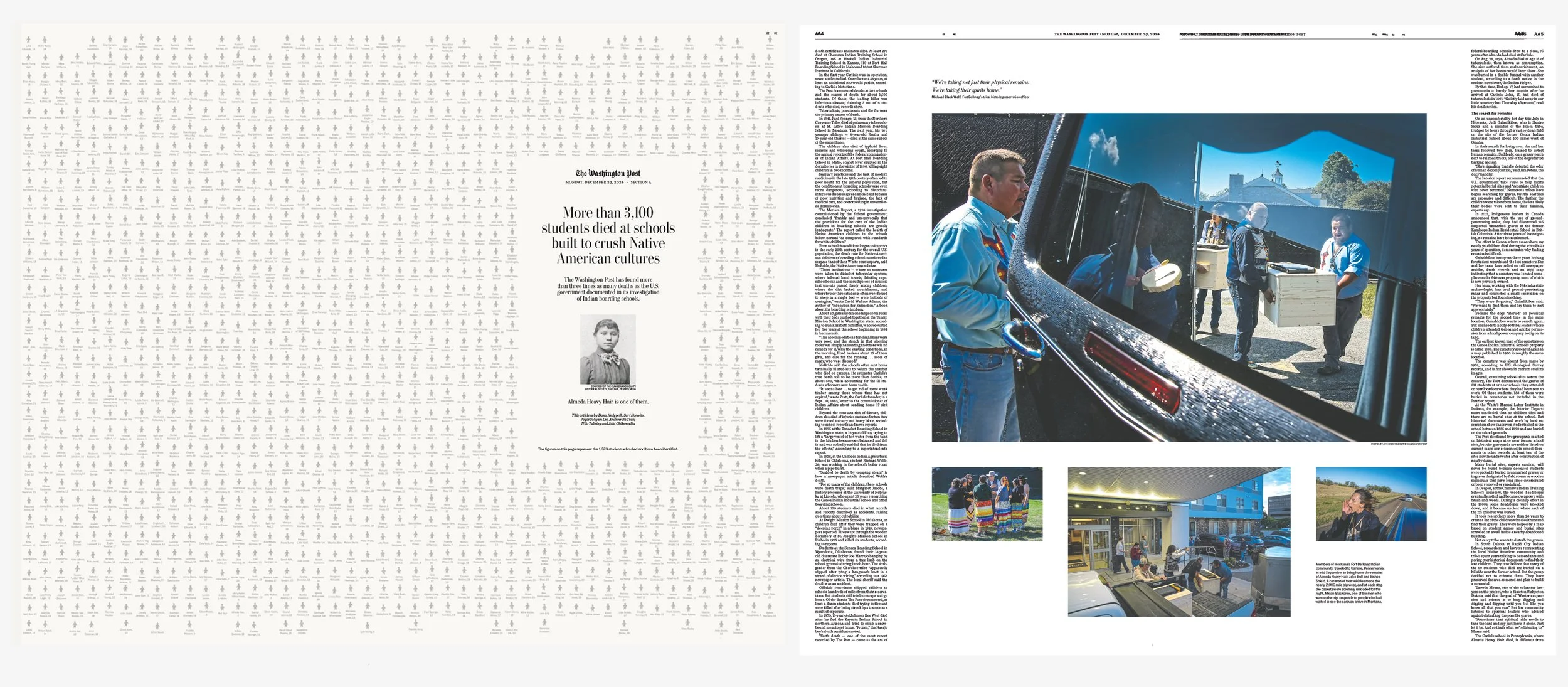
In print, we used the wraparound cover of the special section to show all of the children whose names we had. We included an asterisk in the inset with the display text to explain that, as overwhelming a quantity as this seemed, it was only 1373 of the 3100+ children whose graves the reporters found.
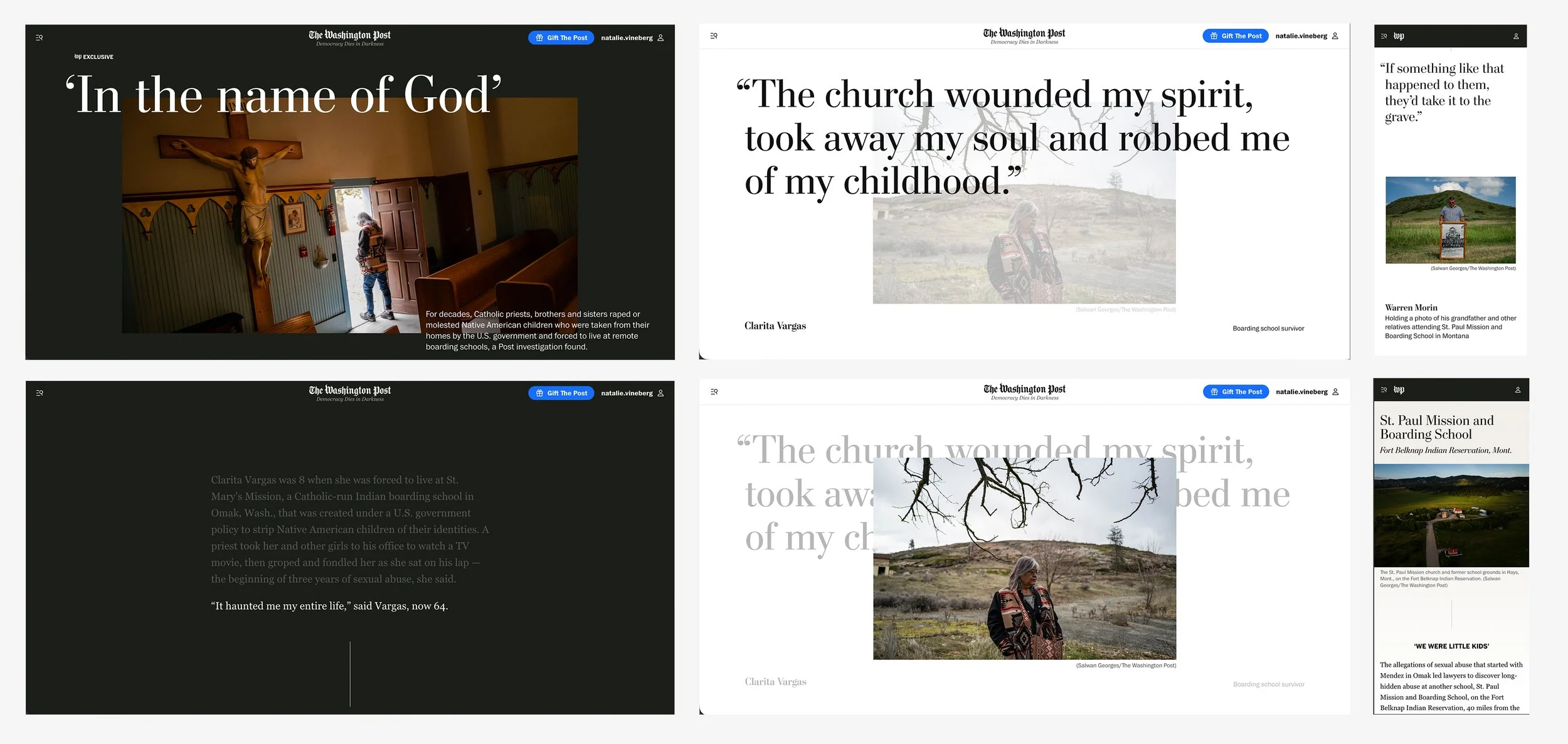
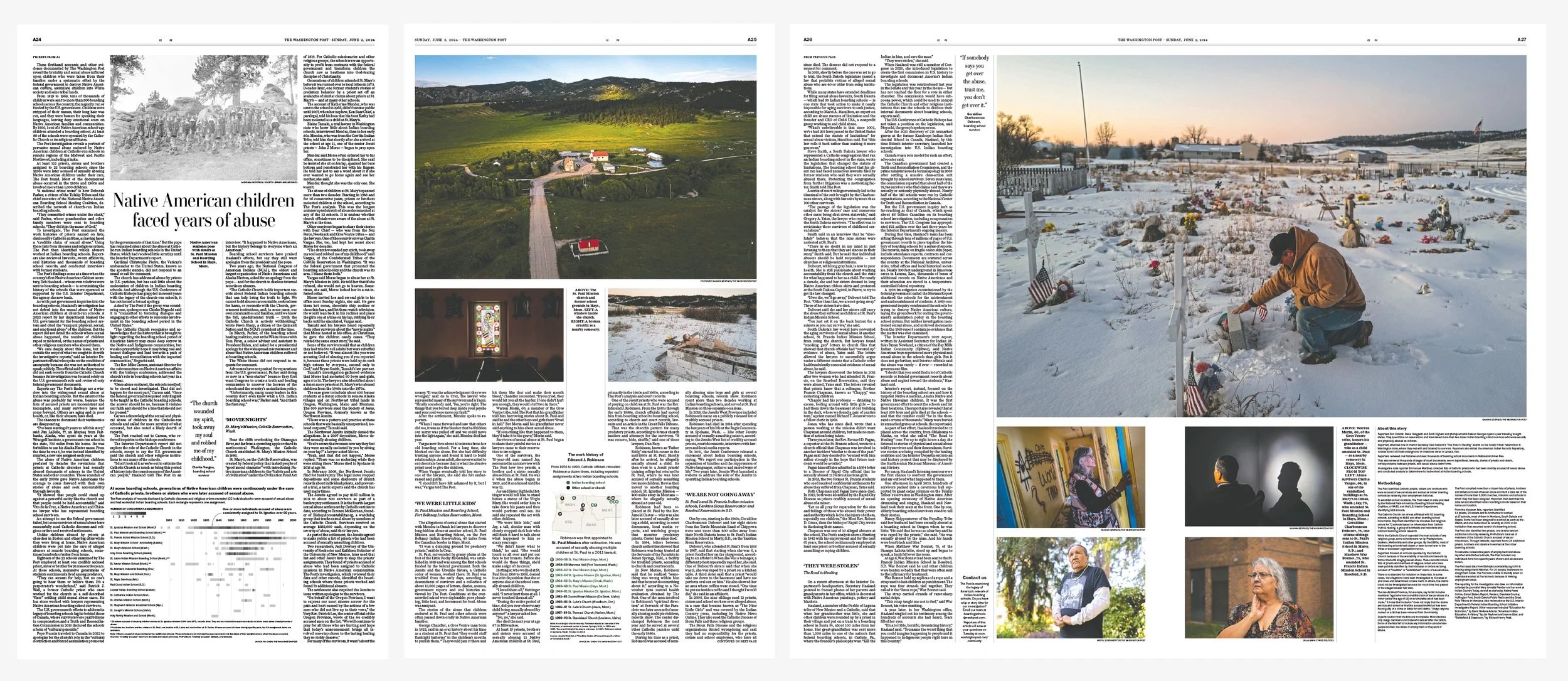
‘In the name of God’
This was a more straightforward reported story. The main thing I wanted to emphasize here is ensuring that the human element of the story was paramount. To accomplish this, we highlighted a few brief individual stories at the beginning, and then made full screen pull quotes to make them impossible to miss. You can read the story here.
Digital